
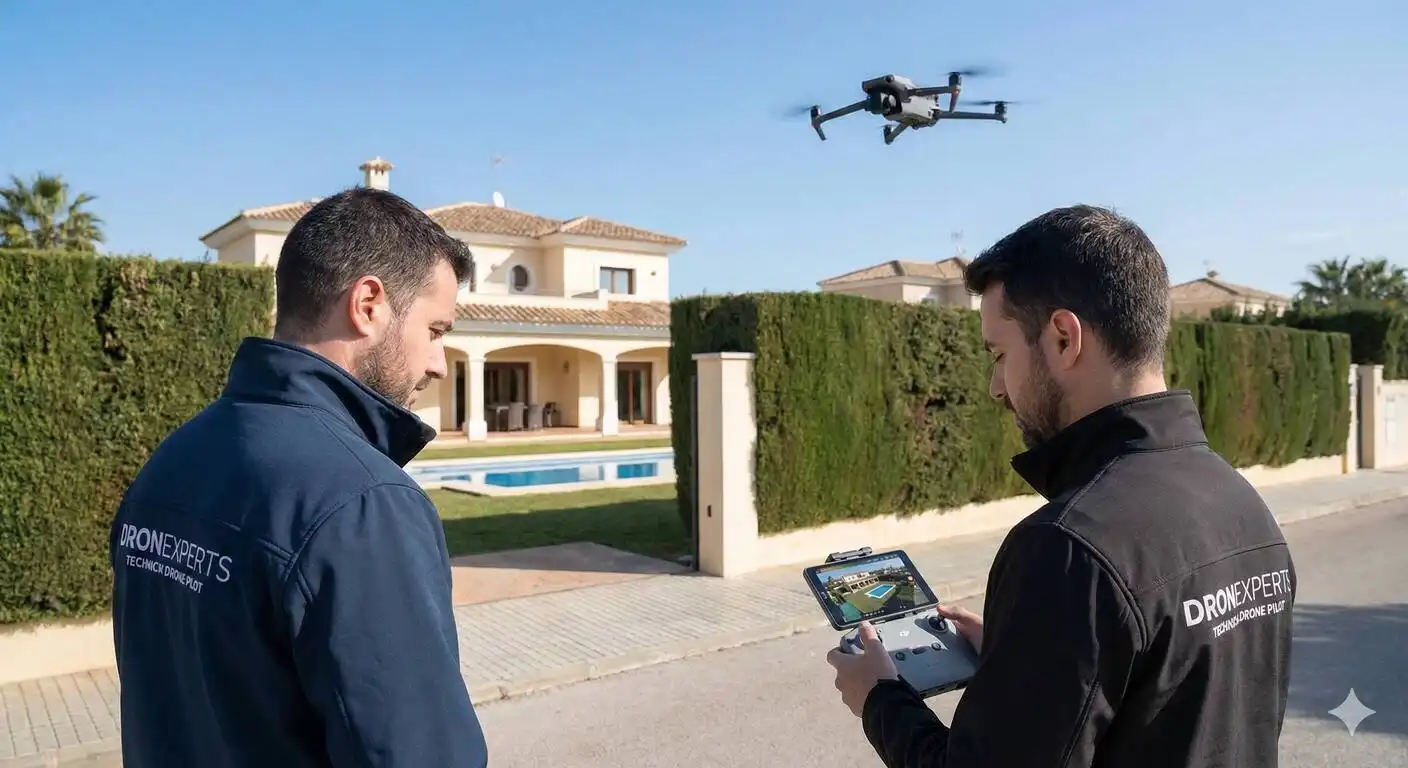
Flying Over Private Property with a Drone: What Does the Law Say in 2026?
Dronexperts
Company
Are you allowed to fly a drone over a house? Everything you need to know about privacy, image rights, penalties, and how to avoid conflicts with Dronexperts.
Flying Over Private Property with a Drone: What Does the Law Say in 2026?
This is undoubtedly the number one source of conflict in the drone world.
On one side, the remote pilot thinks: "The air belongs to everyone; I have the right to fly here!" On the other, the property owner exclaims: "This is my house, this is my garden—get out!"
Who is right? In reality, the answer is nuanced. Drone regulation sits at the intersection of two legal codes: the Transport Code (for aviation) and the Civil Code (for property and privacy).
At Dronexperts, we train our students to navigate these rules to operate without legal risk. Here is what you absolutely need to know in 2026 to avoid trouble (and lawsuits).
Rule #1: Who Owns the Sky?
Legally, airspace belongs to the State, and its management is entrusted to the DGAC (French Civil Aviation Authority). No one "owns" the sky above their house to infinity.
However, Article 552 of the French Civil Code specifies that "ownership of the soil carries with it the ownership of what is above and what is below." This means that an owner can oppose the overflight of their land if the flight interferes with the exercise of their property rights.
In plain English:
- Authorized: A drone passing 50 or 80 meters high, without lingering, generally does not interfere with the use of the land. The overflight is therefore technically possible (except in urban areas for hobbyists, as a reminder).
- Prohibited: A drone flying 5 or 10 meters above the ground in a fenced garden interferes with the owner's enjoyment. This is an infringement of their property rights.
Dronexperts Tip: The line between "nuisance" and "legitimate overflight" is left to the judges' discretion. When in doubt, always ask for permission or fly high enough so as not to be a sonic or visual nuisance.
Rule #2: Capturing Images (The Real Danger)
This is often where amateur pilots get caught. Even if you have the "right to fly" (aeronautically), you do not necessarily have the "right to film."
Article 9 of the Civil Code protects privacy. Article 226-1 of the Penal Code punishes infringing upon the intimacy of the private life of others by capturing, recording, or transmitting images of a person in a private place without their consent.
The red lines not to cross:
- Filming neighbors: If your camera points toward a neighbor's pool or terrace and individuals can be identified, you are in total violation of the law.
- "Abnormal Neighborhood Disturbance": Even without a camera, a drone hovering like a loud mosquito for 20 minutes over a sunbed constitutes a punishable nuisance.
Potential Sanctions
Do not take these rules lightly. In the event of a complaint (to the gendarmerie or a court), the penalties can be severe:
- Invasion of Privacy: Up to 1 year in prison and a €45,000 fine.
- Endangering the Life of Others: If you fly over people recklessly (outside of Open Category rules), this is also a criminal offense.
- Confiscation of Equipment: This is the most common sanction during a check by the GTA (Air Transport Gendarmerie).
Why Hire a Professional for Your Imagery?
Are you a real estate agent, notary, roofer, or architect? Do you need aerial images of private property?
The temptation is great to buy a small drone and do it yourself, or ask a "cousin who has a drone." This is a massive legal risk for your business.
Hiring a company like Dronexperts for your services ensures:
- AlphaTango Compliance: We declare our flights to the prefecture (mandatory for urban areas under S3/STS-01 scenarios).
- Respect for Image Rights: We know how to frame shots to showcase a property without filming the neighbors, and we blur faces or license plates when necessary.
- Insurance: In the event of a crash onto a roof or a veranda, our professional insurance covers the damages. If it is your "leisure" drone, your home insurance will likely refuse to pay for an undeclared commercial activity.
Conclusion: The Keyword is "Respect"
A drone is a fantastic tool, but it is intrusive by nature. The law in 2026 seeks a balance: allowing the drone industry to flourish while protecting the peace of citizens.
- Are you a pilot? Get trained to know your rights and, more importantly, your limits.
- Do you need images? Don't play with fire; hire the experts.
[👉 Need an inspection or aerial images? Request a quote from Dronexperts]
[👉 Want to learn the regulations? Discover our theoretical training courses]
Cookie Settings
We use cookies to optimize your experience, analyze our traffic, and personalize content. To learn more, see our privacy policy.