
DJI vs. Insta360: The 360° Drone War Has Begun
Dronexperts
Company
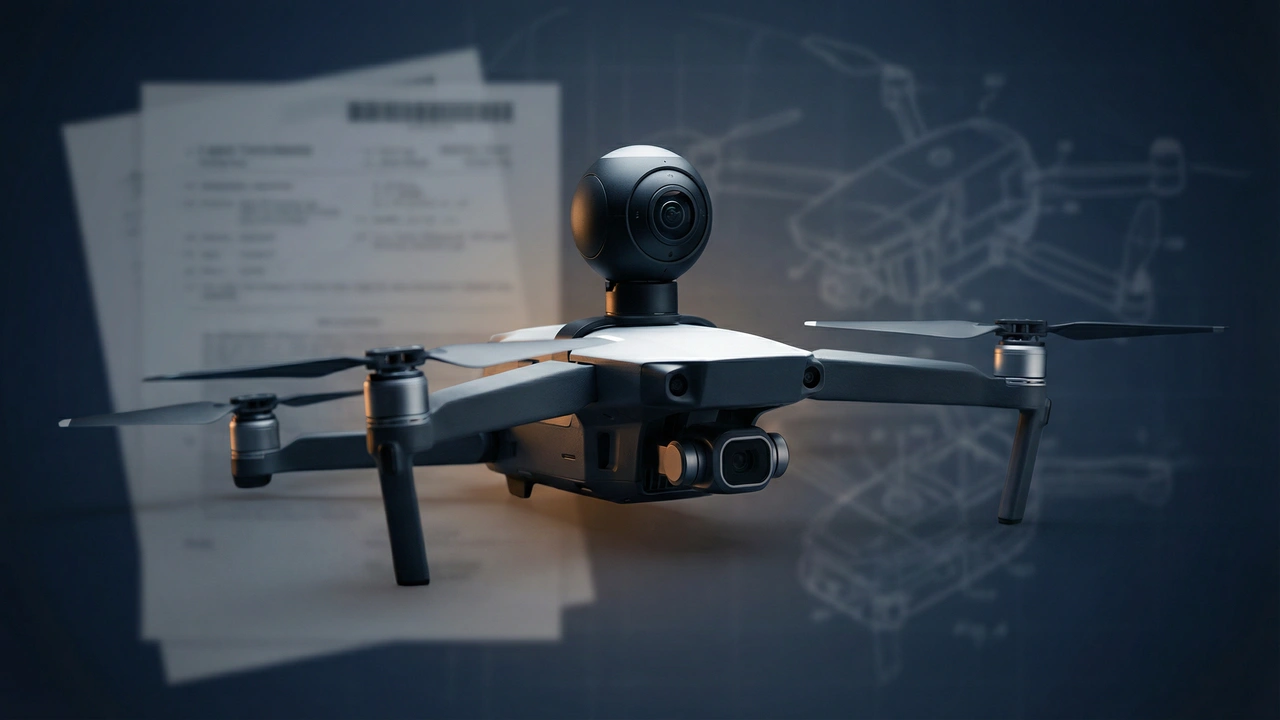
DJI is taking Insta360 to court over patent infringement. Discover the stakes of this technological warfare in the burgeoning 360-degree drone market.
The civil and professional drone market is currently at a historical crossroads. As 360-degree capture technology gradually establishes itself as the new standard for aerial imagery, an unprecedented legal and commercial battle has erupted in China. Global giant DJI has officially filed a complaint against its direct rival, Insta360, for patent infringement. This offensive, launched before the Shenzhen Intermediate Court, marks the beginning of a true 360° drone war. But what is really behind this open conflict between these two tech heavyweights? Let’s decode a strategic clash that could permanently reshape the landscape of aerial innovation.
The Origins of the Conflict: Patents and Talent Leaks
"Service Inventions" at the Heart of the Discord
At the center of this judicial battle, DJI accuses Insta360 of infringing on six major patents. These cover critical and highly strategic technologies: flight control, aircraft structural design, and image processing algorithms. DJI's argument relies on a strict specificity of Chinese intellectual property law. According to this legislation, any innovation developed by an employee within one year of their departure rightfully belongs to their former employer, provided it is related to their previous duties.
Specifically, DJI points to several former engineers from its Research & Development (R&D) division. Now employed by Insta360 (whose parent company is Arashi Vision), these talents allegedly filed patents directly resulting from their past work at the drone leader. One detail has particularly caught the attention of observers: in Chinese patent filings, some inventors requested to remain anonymous, while their real identities—former DJI executives—clearly appear in international registries.
Insta360’s Sharp Retort
The response from the opposing party was swift. JK Liu, founder and CEO of Insta360, firmly rejected these accusations via a lengthy statement on the social network Weibo. He vehemently asserts that all the targeted innovations were created entirely independently within his company. To justify the anonymity of engineers in China, he cites a standard internal practice aimed at protecting employees from aggressive poaching by rival recruiters, rather than an attempt at concealment.
Furthermore, JK Liu emphasized that most of these patents, filed more than four years ago, are no longer even central to Insta360's current product strategy. In a striking move during this media counter-attack, the CEO revealed that his company had identified no fewer than 28 patents it holds that DJI could potentially be infringing upon with its own products. Yet, Insta360 has deliberately chosen not to pursue legal action. "As a small company with limited resources, we prioritize innovation over litigation," he stated, positioning the brand as a victim of a dominant player seeking to stifle competition.
The Hidden Stakes: Dominating the Emerging 360° Drone Market
The Fratricidal Duel: Antigravity A1 vs. DJI Avata 360
The timing of this complaint is anything but coincidental and reveals the true stakes of this war. It comes just days before the highly anticipated launch of the DJI Avata 360, the brand's first FPV (First Person View) drone equipped with a panoramic camera. This new model directly competes with the Antigravity A1, the 8K 360° drone recently launched by Insta360.
The Antigravity A1 has already proven its immense commercial potential by generating over 30 million yuan (approximately €4 million) in sales in just 48 hours on the Chinese market. Faced with this lightning success, DJI—the undisputed leader in civil drones for a decade—sees its hegemony directly threatened in an ultra-promising segment. Airborne 360° capture offers unprecedented creative possibilities, allowing creators to reframe the action in post-production and eliminate blind spots—a revolution for content creators and audiovisual professionals.
Competition Now Extending to All Fronts
Historically, the two Shenzhen-based companies operated in distinct and complementary markets. DJI reigned supreme in drones, while Insta360 dominated the 360-degree action camera sector. Today, these technological boundaries are blurring. DJI recently launched the Osmo 360 to attack Insta360’s home turf, while the latter has taken to the skies with its Antigravity subsidiary. This convergence of technologies is transforming a niche rivalry into a total war for global control of immersive imagery.
What are the Consequences for the Industry and Remote Pilots?
A Major Legal Precedent for Tech
Beyond a simple commercial battle, this trial raises crucial questions about talent mobility in the tech industry. If DJI wins this legal battle, it could create a major legal precedent in China and internationally. Engineers could find their ability to leverage their expertise severely restricted after changing employers. For many industry analysts, this complaint is as much about deterring "brain drain" to emerging competitors as it is about protecting pure intellectual property.
Innovation Stimulated by Fierce Competition
Despite these palpable tensions, this war of the titans is, paradoxically, excellent news for consumers and drone professionals. The fierce competition between DJI and Insta360 pushes both manufacturers to innovate faster, lower prices, and offer increasingly high-performance products.
Insta360, bolstered by its recent total court victory against GoPro in the United States (before the International Trade Commission), displays unwavering confidence. The company has already announced the launch of seven to eight new products this year, including a new drone. Meanwhile, DJI continues to push the boundaries of FPV capture with the Avata 360, promising unprecedented immersive flight experiences coupled with exceptional image quality.
Conclusion
The 360° drone war is only just beginning. Between complex legal battles for patent protection and a frantic race for technological innovation, DJI and Insta360 are redrawing the future of aerial capture. While the outcome of the trial in Shenzhen remains uncertain, one thing is for sure: the ultimate winner of this rivalry will be the end user. Remote pilots will soon benefit from creation tools that are more powerful, versatile, and immersive than ever before.
Do you want to stay informed about the latest technological developments and master this new equipment legally? Discover our specialized training courses at Dronexperts and get a head start on the tools of tomorrow today!
Cookie Settings
We use cookies to optimize your experience, analyze our traffic, and personalize content. To learn more, see our privacy policy.